There's a moment every gardener knows. You're standing at the back door with a cup of tea, looking out at the lawn, the tired patio, the shed you've been meaning to do something about — and you can almost see it. The garden it could be.
My wife, Katie, knows that moment. I don't, or at least I didn't. She is the gardener in our house — properly, in the way that means she can stand in front of a struggling border and tell you what's wrong with it before she's finished her tea. Too dry. Planted too deep. That one wants two more hours of sun than this corner will ever give it.
I can't do any of that. I'm a builder by nature — I make things that work. So I would stand at the same back door, look at the same garden, and see only that something ought to happen to it.
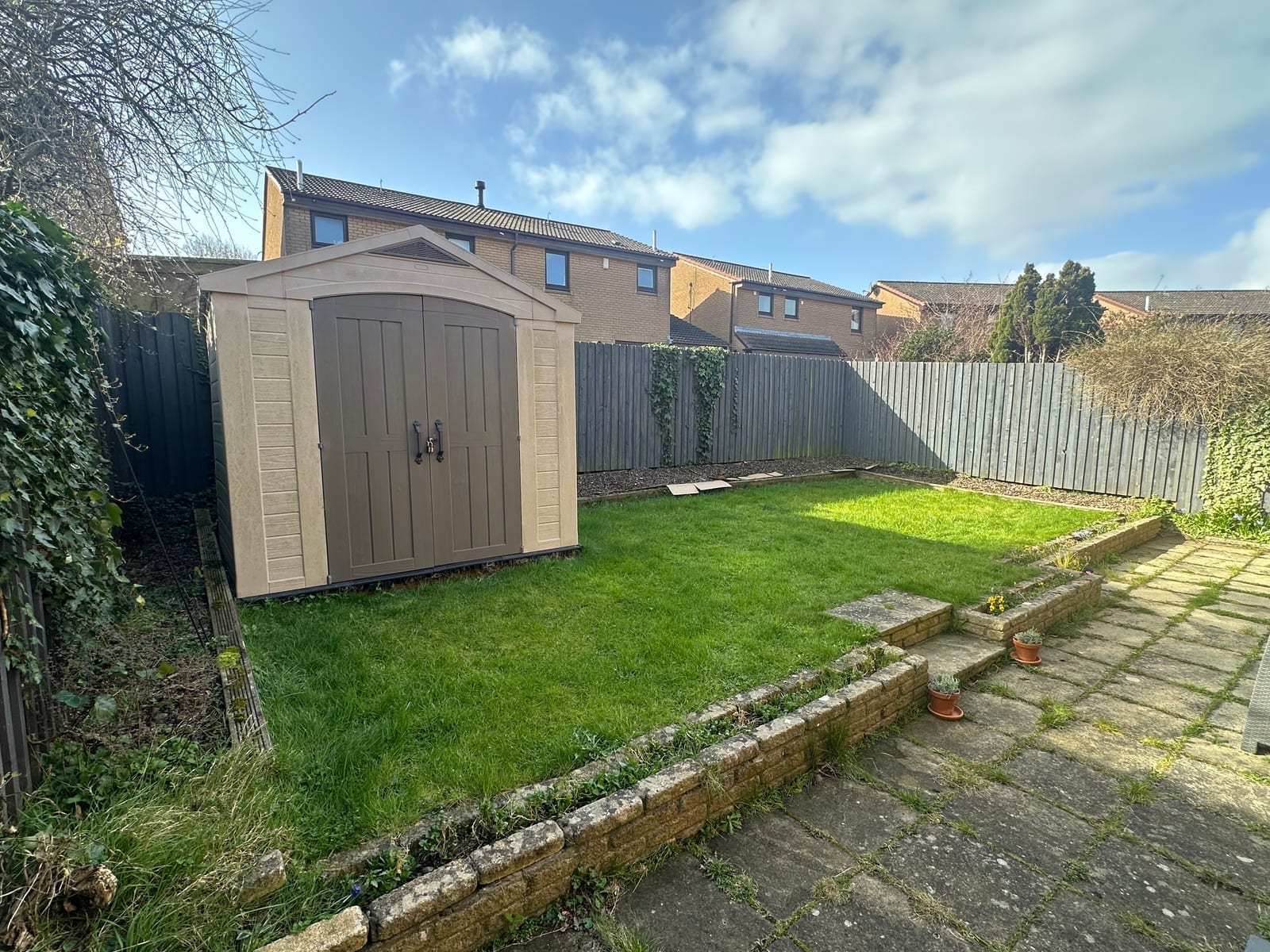
The garden is a modest plot near Edinburgh: a raised lawn, a stone retaining wall holding the change in level, a paved patio, a beige plastic shed. Ours for years, and quietly waiting for a decision the whole time.
The experimentSo I asked an AI to imagine it
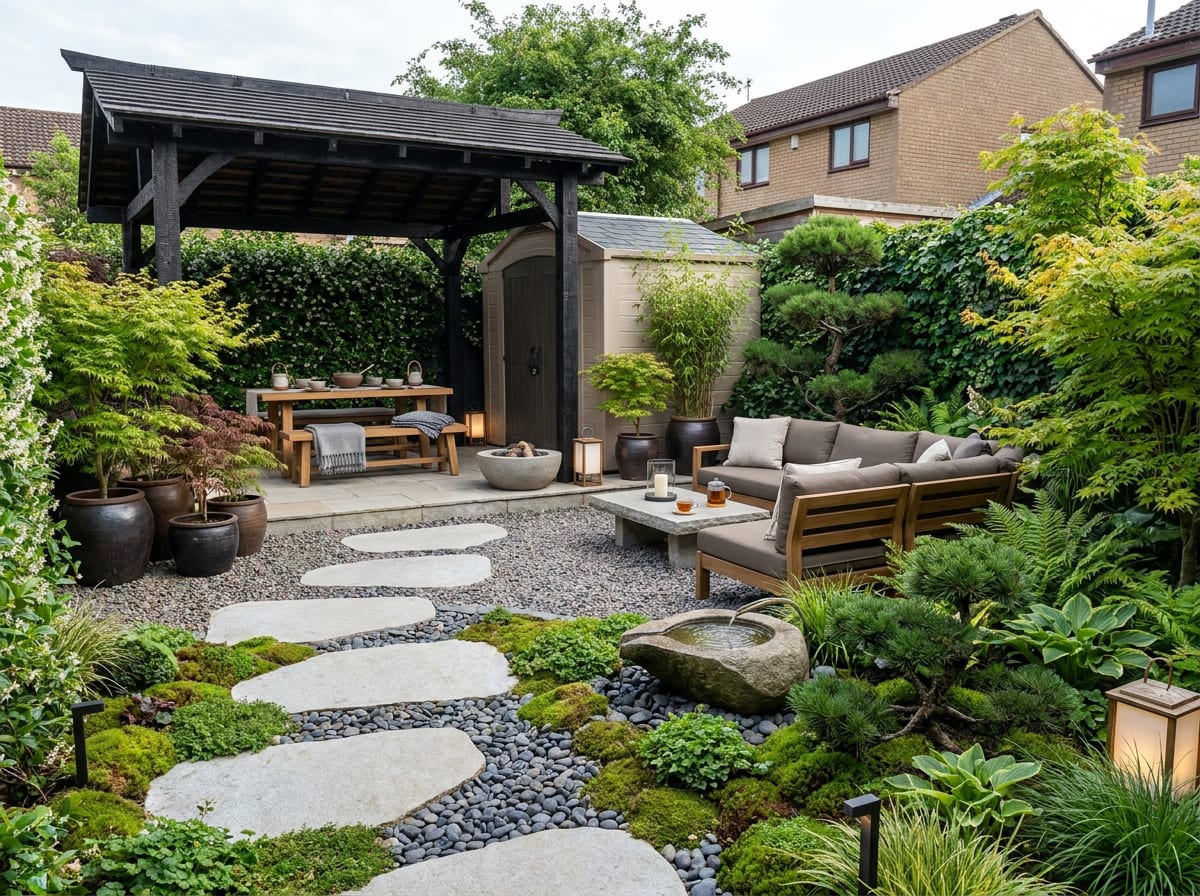
I did what someone like me does. I took a photograph of the garden, gave it to an image model, and described what I'd been carrying around in my head: something Japanese-inspired, a courtyard of moss and stone, quiet and green and a little bit still.
What came back was lovely. Cloud-pruned pines. A pergola holding the evening light. Stepping stones drifting through moss. I looked at it for a long time.
Then I showed Katie.
The gapWhat she saw that I hadn't
She liked it too. And then, in the flat, unhurried way of someone who actually knows: where's the wall gone?
Once she'd said it I couldn't stop seeing it. The raised lawn and its stone retaining wall — the thing that decides how our entire garden works — had quietly flattened into one level. The patio we'd paid good money for had evaporated. The plot had grown a metre or two in every direction, because imagined gardens are never small.
Then she went through the planting, which was the part I couldn't have judged at all. Some of it was lovely. Some of it would sulk here. A little of it would be dead by March.
And here's the thing I want to be fair about: the AI did exactly what I asked. I'd asked for a picture, and I got a beautiful one. Image models are genuinely extraordinary at that, and there is real value in seeing a feeling made visible — we'd never have started talking about the garden seriously without it.
But a picture and a plan are different objects. The picture doesn't know your wall is holding back a tonne of soil. It doesn't know which way your garden faces, or that the far corner stays in shade until June, or what survives a winter at this latitude. It was never asked to know. It was asked to be beautiful, and it was.
What I actually wanted was the thing Katie could do — read the garden that exists, then decide what belongs in it. That isn't a mysterious gift, either. It's a profession. Garden designers do exactly this, they do it well, and they're worth what they charge for it.
They're also several thousand pounds. A commissioned planting scheme starts at around £1,500 and climbs from there, and we couldn't afford one — which I suspect is true of most people standing at their own back door with a cup of tea, seeing what their garden could be and getting no further.
So I started building it.
The buildWhat I ended up making
It holds the shape of your space
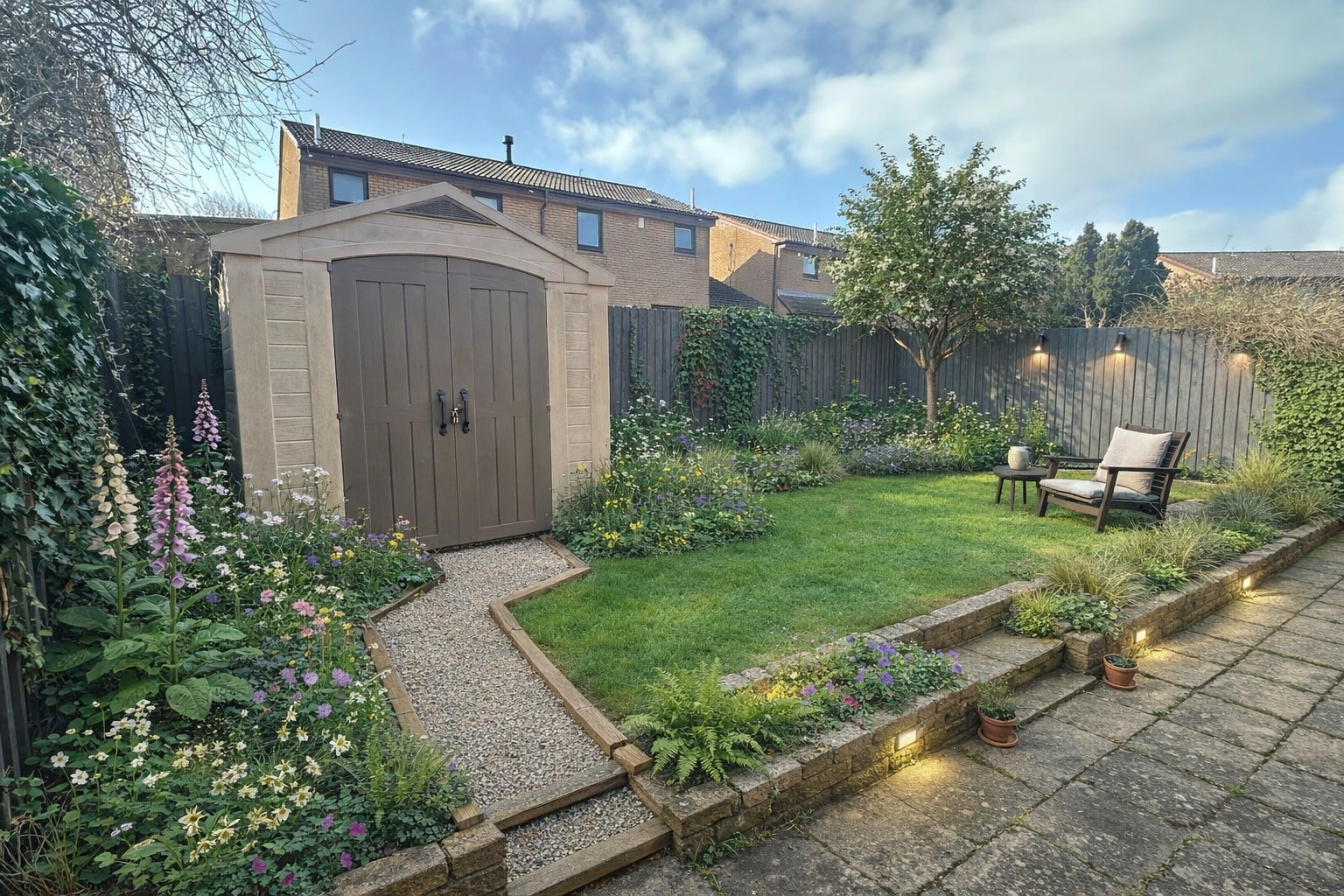
The design works to a strict set of spatial rules before a single plant is placed. Your levels stay your levels. Retaining walls, steps, existing paving, boundaries, the shed — the bones of your garden are treated as facts to design with, rather than details to paint over. When you show a Verdure design to someone standing in your garden, they should recognise it instantly. That was the test from day one, and I had Katie to run it past.
It tells you what's actually in the picture
Every design comes with a numbered planting plan — each plant identified, positioned and named. Not "some ferns, probably." These ferns, there, in that bed. It's the answer to the question Katie asked about every single thing in that first image.
It reads the light before it plants a thing
Every garden has its own sun story — the wall that traps afternoon heat, the corner the fence keeps in shade until June, the border that only earns its light after lunch. Verdure works out your garden's aspect and how the sun tracks across it through the day and the seasons, then divides the space into sun-pattern planting zones. Sun-lovers go where the light actually falls; shade-lovers get the quiet corners they prefer. A hydrangea sulking in full sun and a lavender rotting in damp shade are the two most common ways a planting plan fails — so the light comes first, and the plants follow it.
It plants for your postcode, not a postcard
A garden that looks glorious in an image and dies in its first frost is worse than no design at all. Verdure's plant choices are matched to your local climate — and properly local, because I learned this the hard way in a garden that gets Scottish weather. A garden in coastal Scotland is not a garden in Surrey, and neither is a garden in the Cotswolds. The climate model is cloud-aware, too: it works from how much light actually reaches your sky, not what your latitude promises — so Scotland's brighter east coast and its softer, cloudier west read as the different gardens they are.
You get the plan, not just the picture
Alongside the render you get the full plan document: the planting list, the layout, the costs, and a care calendar that tells you what to do and when, season by season. It's the difference between a mood board and something you can take to the garden centre on Saturday morning.
The pointInspiration you can dig
I'm not going to tell you that beautiful garden imagery is a bad thing. It isn't. It's how most people start, it's how we started, and a picture that makes you want to go outside has done something worth doing.
But there's a moment when wanting turns into doing — when you need a design that fits your levels, your paving, your light and your winters, and comes with the instructions to build it. That's the job Verdure took on.
A picture tells you how a garden might feel. A plan tells you what to buy, where to put it, and what to do about it in February.
The standard I hold it to hasn't changed since that first evening. Verdure is doing its job when Katie looks at a plan, thinks about it for a moment, and says: yes — that would work here.
— Jeff, founder of Verdure
❦
From dreaming to doing
The plan for the garden you have
Verdure is AI garden design that respects the garden you have — your levels, your light, your winters — with the plan to make it real.